
Single-cell & spatial biology
Cell atlases can reveal regenerative and fibrotic states that bulk measurements obscure. Spatial methods add the tissue neighbourhoods and cell–cell interactions that determine how repair unfolds.1
Organoids & organs-on-chips
Patient-derived or pluripotent-stem-cell-derived organoids can model development, disease and treatment response. Integration with perfused chips may improve physiological relevance, although vascularisation, maturity, reproducibility and scale remain barriers.2
Genome engineering & programmable biology
Gene editing may correct disease-causing variants or engineer cellular functions. Translation depends on specificity, genomic integrity, durable control and long-term surveillance.3
Artificial intelligence & precision medicine
Computational methods can integrate imaging, omics and clinical data, help design biomaterials and identify response signatures. Prospective validation and representative data are essential before clinical decision-making.4
Ageing biology and regenerative resilience
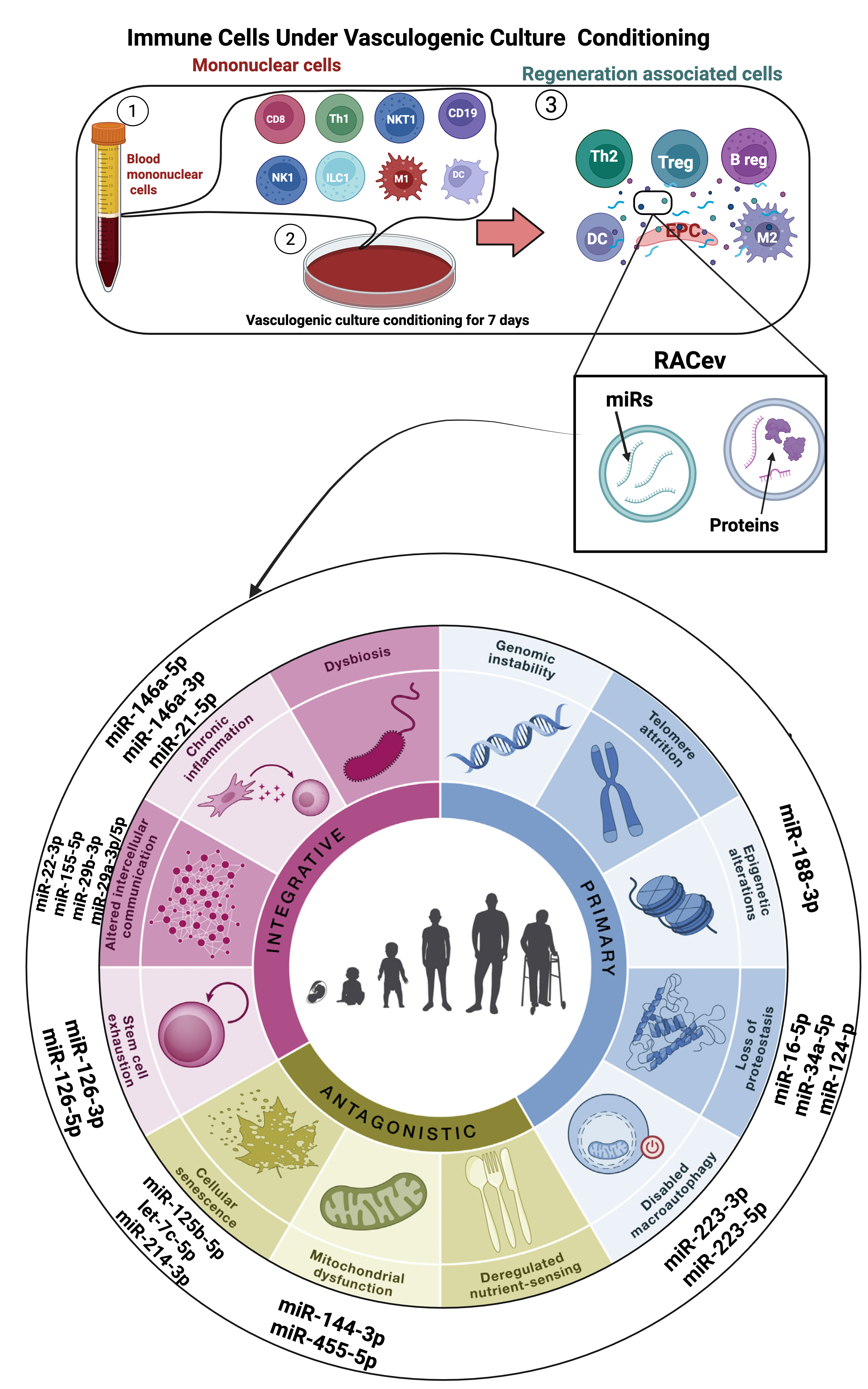
Ageing involves interacting processes including genomic instability, telomere attrition, epigenetic change, impaired proteostasis, mitochondrial dysfunction, cellular senescence, altered intercellular communication and chronic inflammation. These are research frameworks, not a single reversible clock.1
Cell-derived vesicles and microRNAs are being studied as biomarkers and experimental modulators of ageing-associated pathways. Evidence from molecular or animal studies does not establish systemic rejuvenation in humans.
A more measurable field
Progress will depend less on calling a product ‘regenerative’ and more on demonstrating its identity, mechanism, potency, safety and clinically meaningful benefit for a defined patient population.2
Reproducible science
Data standards and predictive selection
Shared cell ontologies, harmonised assays and accessible metadata can make studies comparable across laboratories. Linking spatial, single-cell, imaging and clinical data may reveal which tissue states are repairable and which are dominated by irreversible fibrosis.3
Future precision approaches may select a product, dose and delivery method from measurable features of the patient and tissue. Such models require prospective validation, representative populations and monitoring for performance drift before they can support clinical decisions.