
Clinical assessment
Review may include symptoms, pathology, CT, MRI, PET/CT, stage, surgery, systemic therapy, radiotherapy and family history. The goal is to define the medical question before selecting a test.1
Integrated interpretation
Results are interpreted with tumour histology, disease stage, previous therapy, specimen quality and current evidence. Multidisciplinary referral is arranged when required.2
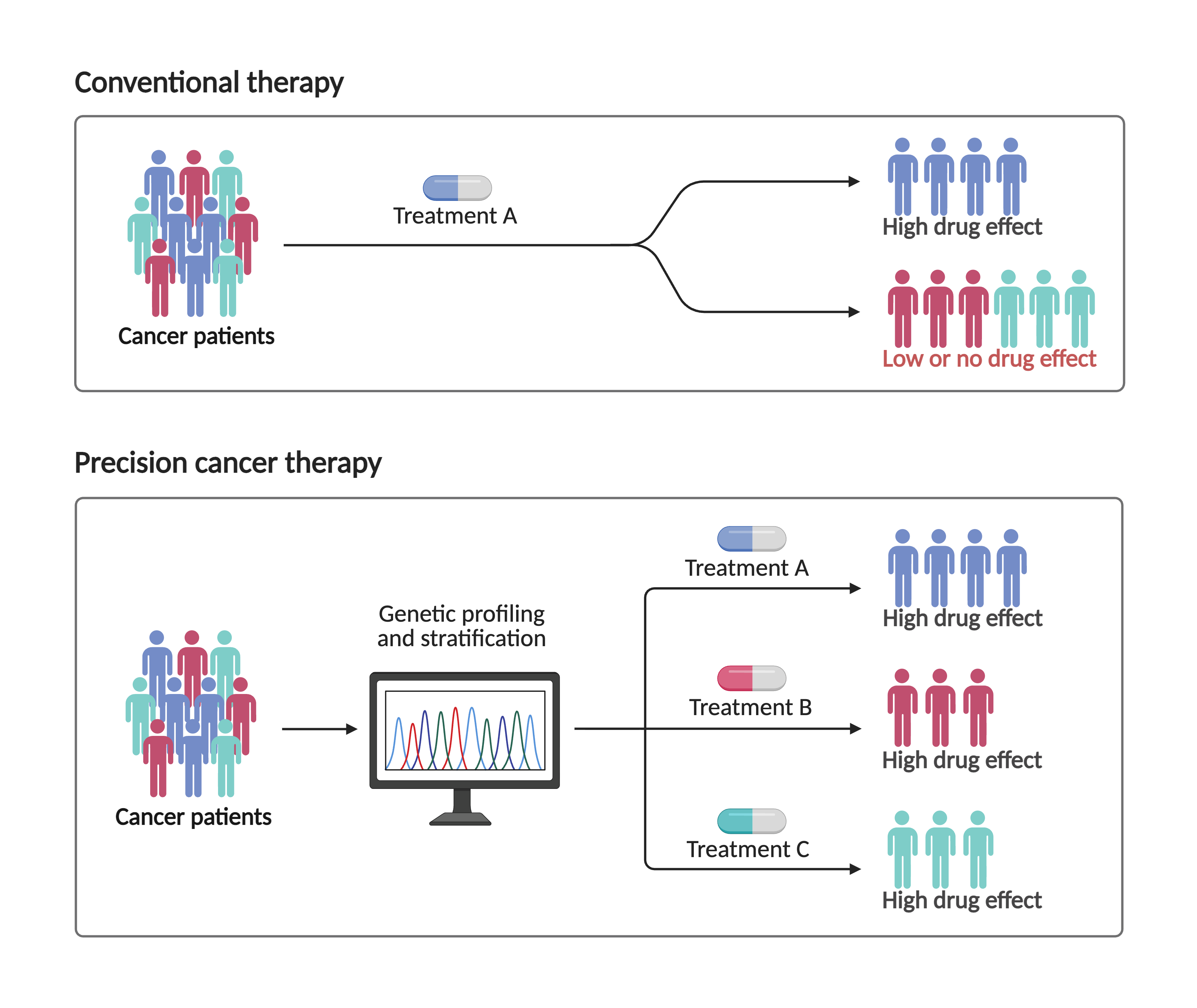
Conventional treatment can produce heterogeneous responses. Precision oncology uses validated tumour and patient biomarkers to stratify therapy, but a molecular match is clinically meaningful only when supported by evidence in the relevant cancer type and treatment setting.1
Created with BioRender.com. Scientific interpretation and caption by QAZIIM.Mechanism, evidence and limitations
Molecular findings are evaluated through biological plausibility, analytical validity, tumour-specific clinical evidence and potential impact on management. Associations from another cancer type are not automatically transferable.3
Longitudinal and multidisciplinary interpretation
Cancer evolves across anatomical sites and under treatment pressure. Pathology, imaging, treatment history, specimen quality and molecular data are reviewed together, with repeat assessment considered only when it can answer a defined clinical question.4
References
- Chakravarty, D. & Solit, D. B. Clinical cancer genomic profiling. Nat. Rev. Genet. 22, 483–501 (2021).
- Thavaneswaran, S. et al. Therapeutic implications of germline genetic findings in cancer. Nat. Rev. Clin. Oncol. 16, 386–396 (2019).
- Ginsburg, O. et al. The role of genomics in global cancer prevention. Nat. Rev. Clin. Oncol. 18, 116–128 (2021).
- Hanahan, D. Hallmarks of cancer: new dimensions. Cancer Discov. 12, 31–46 (2022).
- Dagogo-Jack, I. & Shaw, A. T. Tumour heterogeneity and resistance to cancer therapies. Nat. Rev. Clin. Oncol. 15, 81–94 (2018).
- Ignatiadis, M., Sledge, G. W. & Jeffrey, S. S. Liquid biopsy enters the clinic. Nat. Rev. Clin. Oncol. 18, 297–312 (2021).