
From biomarker to treatment
Alterations in oncogenic drivers, immune-related biomarkers and DNA-repair pathways may inform targeted therapy, immunotherapy or other strategies only in the relevant disease and evidence context.1
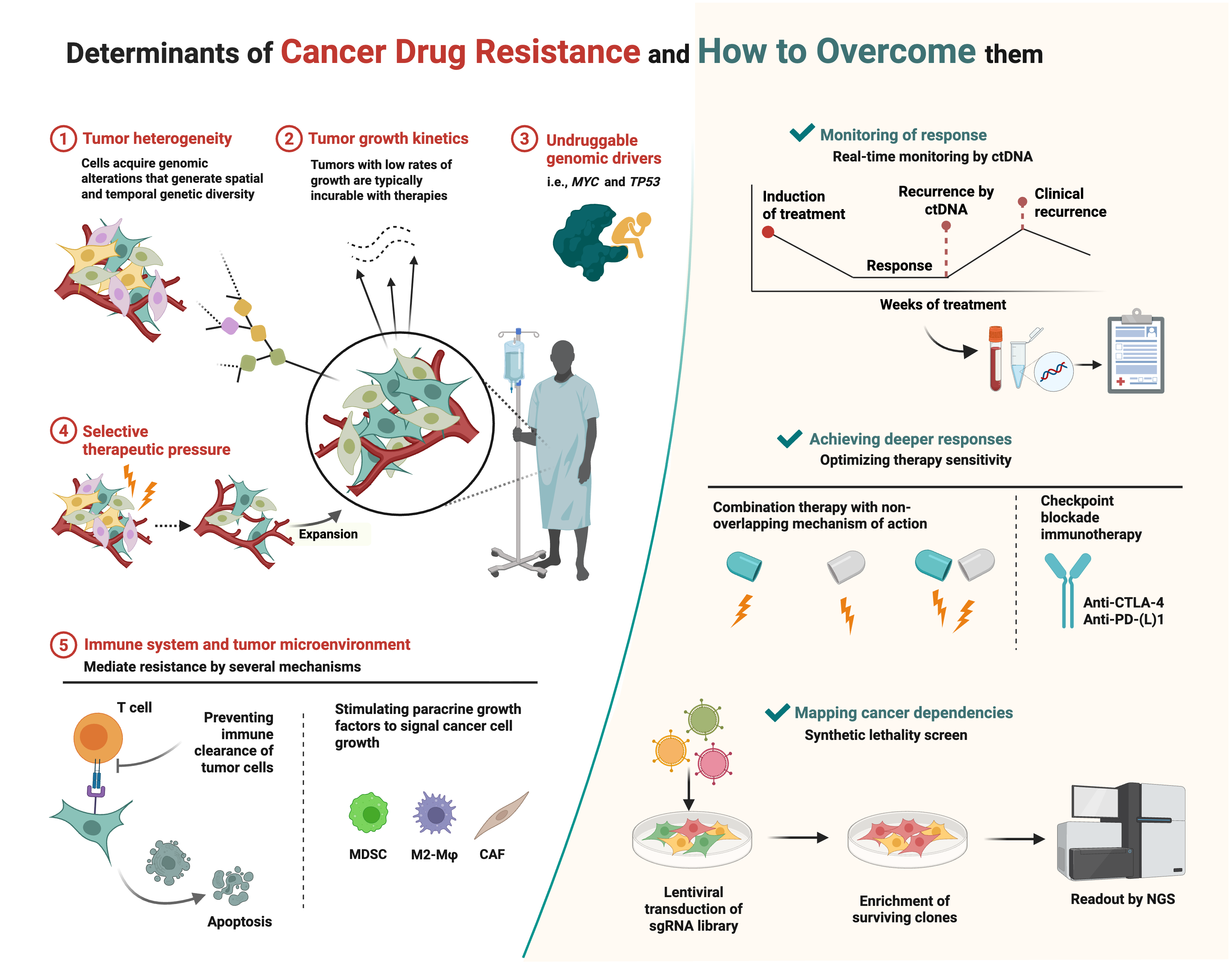
Resistance can be intrinsic or acquired through pre-existing heterogeneity, target alteration, bypass signalling, lineage plasticity, selective pressure and protection by stromal or immune cells. Serial molecular assessment and rational combinations address distinct mechanisms but require prospective clinical evidence.5
Created with BioRender.com. Scientific interpretation and caption by QAZIIM.Evolution and reassessment
Tumours evolve under treatment pressure. At progression, repeat tissue or circulating-tumour analysis can identify resistance or newly actionable alterations when the result could change management.2
Mechanism, evidence and limitations
Molecular findings are evaluated through biological plausibility, analytical validity, tumour-specific clinical evidence and potential impact on management. Associations from another cancer type are not automatically transferable.3
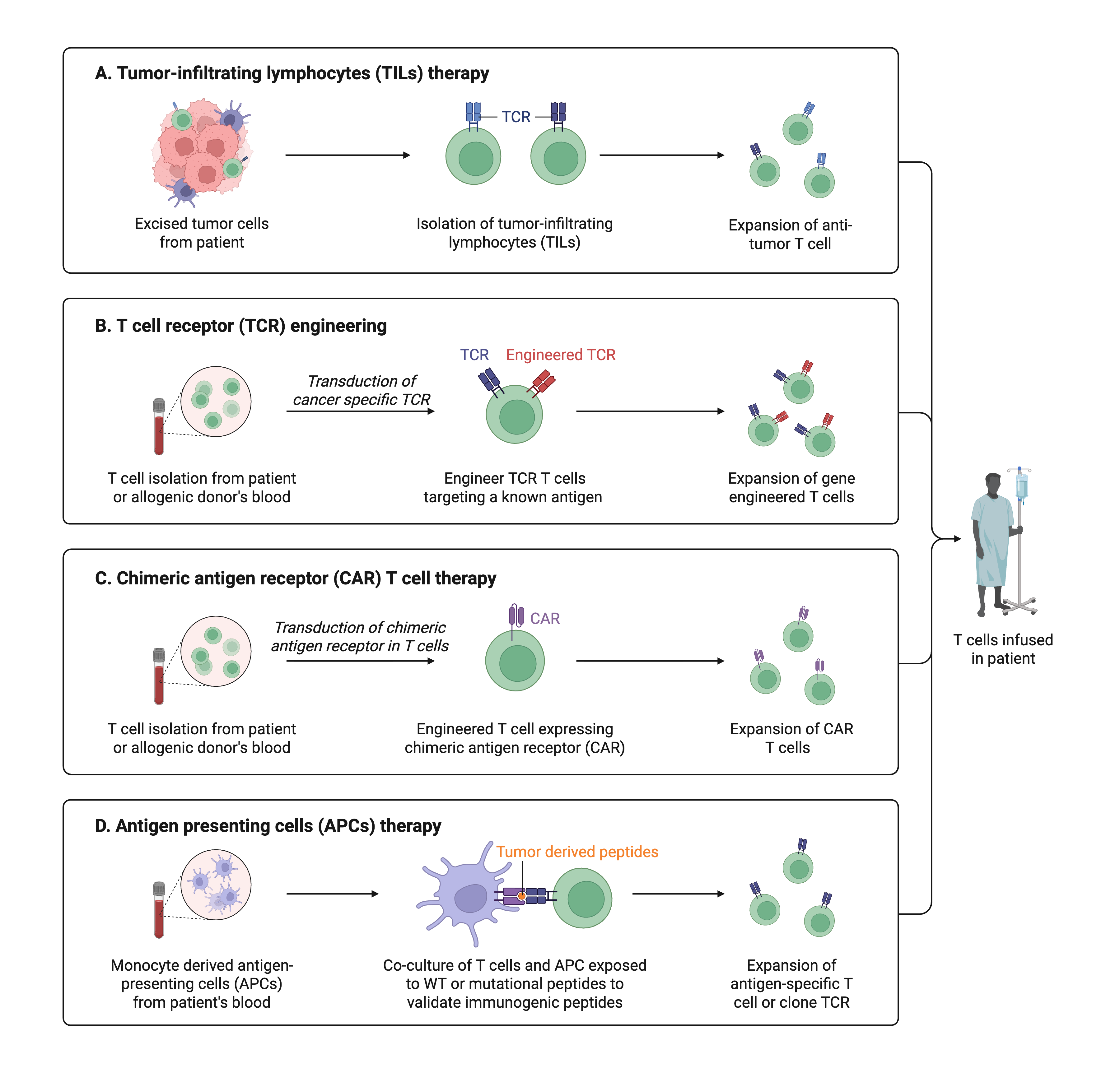
TIL therapy expands naturally tumour-reactive lymphocytes; engineered TCR cells recognise peptide–HLA complexes; CAR-T cells recognise selected surface antigens; antigen-presenting-cell approaches stimulate antigen-specific responses. Manufacturing, antigen selection, trafficking, persistence and toxicity differ substantially between platforms.1
Created with BioRender.com. Scientific interpretation and caption by QAZIIM.Longitudinal and multidisciplinary interpretation
Cancer evolves across anatomical sites and under treatment pressure. Pathology, imaging, treatment history, specimen quality and molecular data are reviewed together, with repeat assessment considered only when it can answer a defined clinical question.4
References
- Chakravarty, D. & Solit, D. B. Clinical cancer genomic profiling. Nat. Rev. Genet. 22, 483–501 (2021).
- Thavaneswaran, S. et al. Therapeutic implications of germline genetic findings in cancer. Nat. Rev. Clin. Oncol. 16, 386–396 (2019).
- Ginsburg, O. et al. The role of genomics in global cancer prevention. Nat. Rev. Clin. Oncol. 18, 116–128 (2021).
- Hanahan, D. Hallmarks of cancer: new dimensions. Cancer Discov. 12, 31–46 (2022).
- Dagogo-Jack, I. & Shaw, A. T. Tumour heterogeneity and resistance to cancer therapies. Nat. Rev. Clin. Oncol. 15, 81–94 (2018).
- Ignatiadis, M., Sledge, G. W. & Jeffrey, S. S. Liquid biopsy enters the clinic. Nat. Rev. Clin. Oncol. 18, 297–312 (2021).