
Who should be assessed
Young age at diagnosis, multiple primary cancers, clustered related cancers, bilateral or multifocal disease, male breast cancer, ovarian cancer and selected pancreatic or prostate cancers can indicate inherited predisposition.1
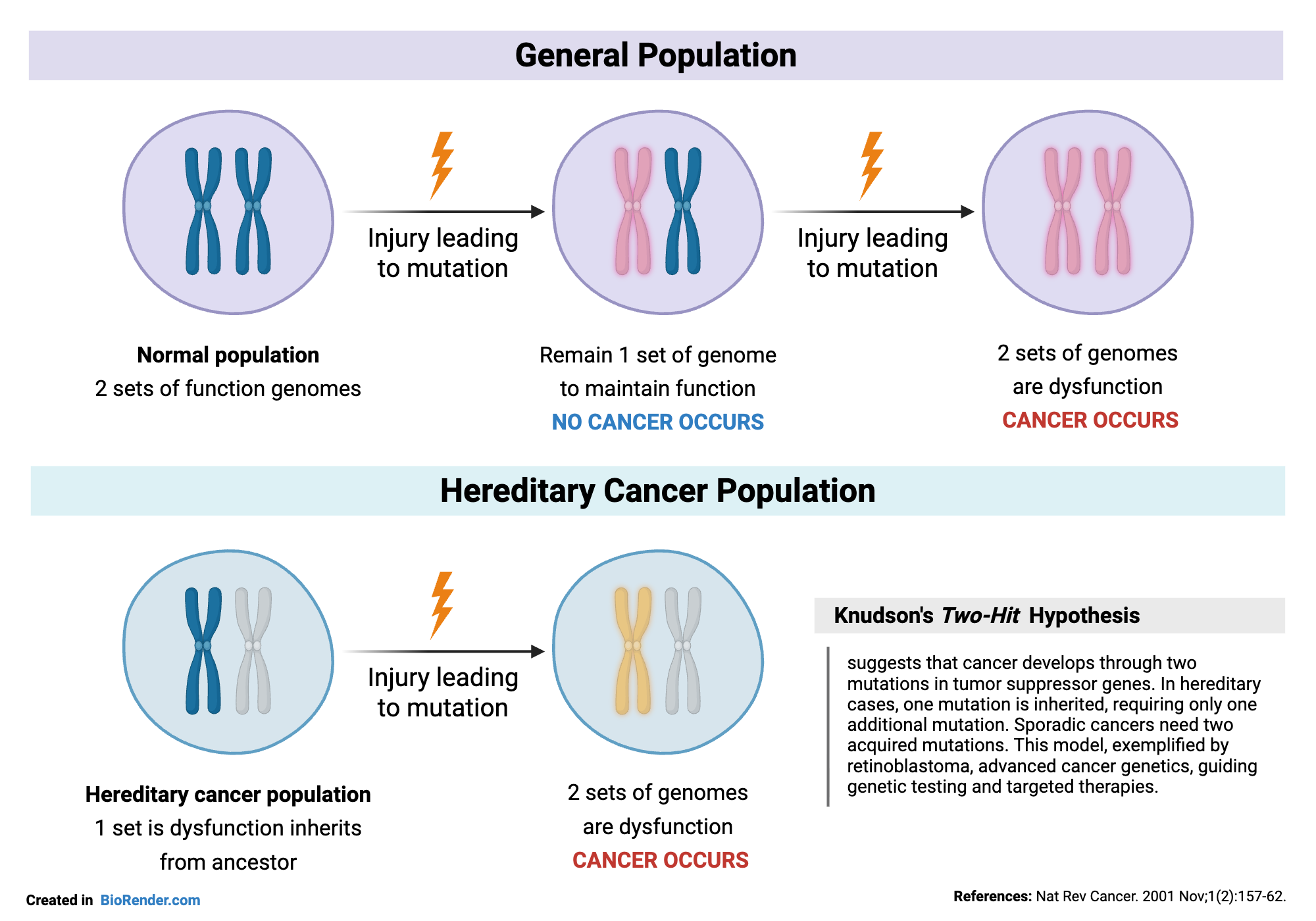
For many tumour-suppressor genes, loss of both functional copies contributes to tumorigenesis. In hereditary predisposition, one pathogenic germline alteration is present from conception and a later somatic event can disable the remaining allele; real tumours can reach biallelic loss through several molecular mechanisms.2
Created with BioRender.com. Scientific interpretation and caption by QAZIIM.Risk-adapted screening
Genetic testing does not replace established screening. A clinically significant result may justify earlier, more frequent or organ-specific surveillance for the patient and at-risk relatives.2
Mechanism, evidence and limitations
Molecular findings are evaluated through biological plausibility, analytical validity, tumour-specific clinical evidence and potential impact on management. Associations from another cancer type are not automatically transferable.3
Longitudinal and multidisciplinary interpretation
Cancer evolves across anatomical sites and under treatment pressure. Pathology, imaging, treatment history, specimen quality and molecular data are reviewed together, with repeat assessment considered only when it can answer a defined clinical question.4
References
- Chakravarty, D. & Solit, D. B. Clinical cancer genomic profiling. Nat. Rev. Genet. 22, 483–501 (2021).
- Thavaneswaran, S. et al. Therapeutic implications of germline genetic findings in cancer. Nat. Rev. Clin. Oncol. 16, 386–396 (2019).
- Ginsburg, O. et al. The role of genomics in global cancer prevention. Nat. Rev. Clin. Oncol. 18, 116–128 (2021).
- Hanahan, D. Hallmarks of cancer: new dimensions. Cancer Discov. 12, 31–46 (2022).
- Dagogo-Jack, I. & Shaw, A. T. Tumour heterogeneity and resistance to cancer therapies. Nat. Rev. Clin. Oncol. 15, 81–94 (2018).
- Ignatiadis, M., Sledge, G. W. & Jeffrey, S. S. Liquid biopsy enters the clinic. Nat. Rev. Clin. Oncol. 18, 297–312 (2021).