
Cancer biology is heterogeneous
Cancer develops through acquired genomic alterations, inherited susceptibility, epigenetic regulation, tumour microenvironment and patient-specific clinical factors. Molecular findings complement—not replace—histopathology, imaging and staging.1
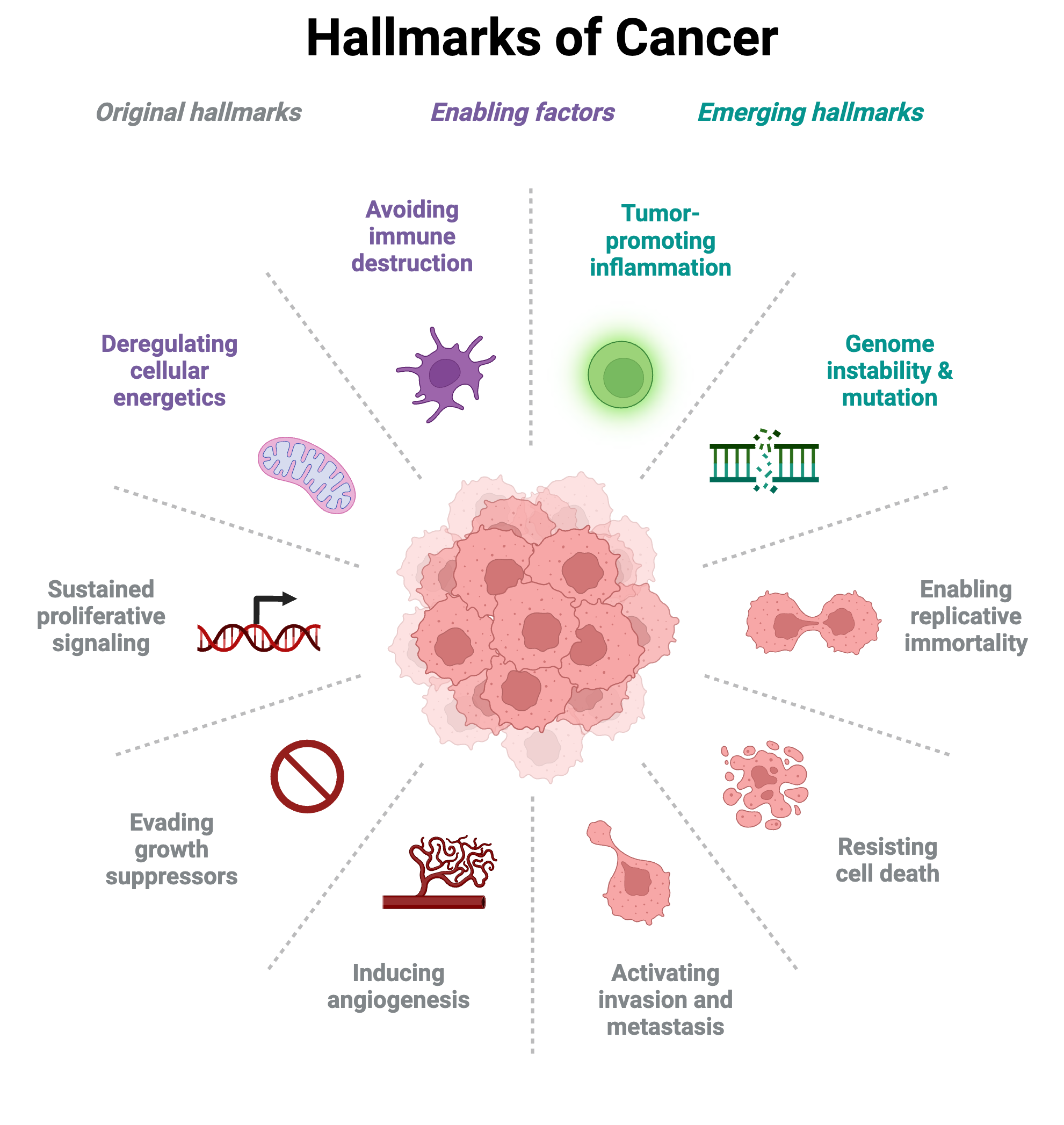
Malignant growth emerges through interacting capabilities, including sustained proliferation, resistance to cell death, replicative immortality, angiogenesis, invasion, metabolic adaptation and immune escape. Genome instability and tumour-promoting inflammation enable further evolution; the model is a conceptual framework rather than a diagnostic checklist.4
Created with BioRender.com. Scientific interpretation and caption by QAZIIM.Four connected services
QAZIIM connects oncology consultation, tumour genomic profiling, hereditary cancer assessment and molecular support for treatment selection and monitoring.2
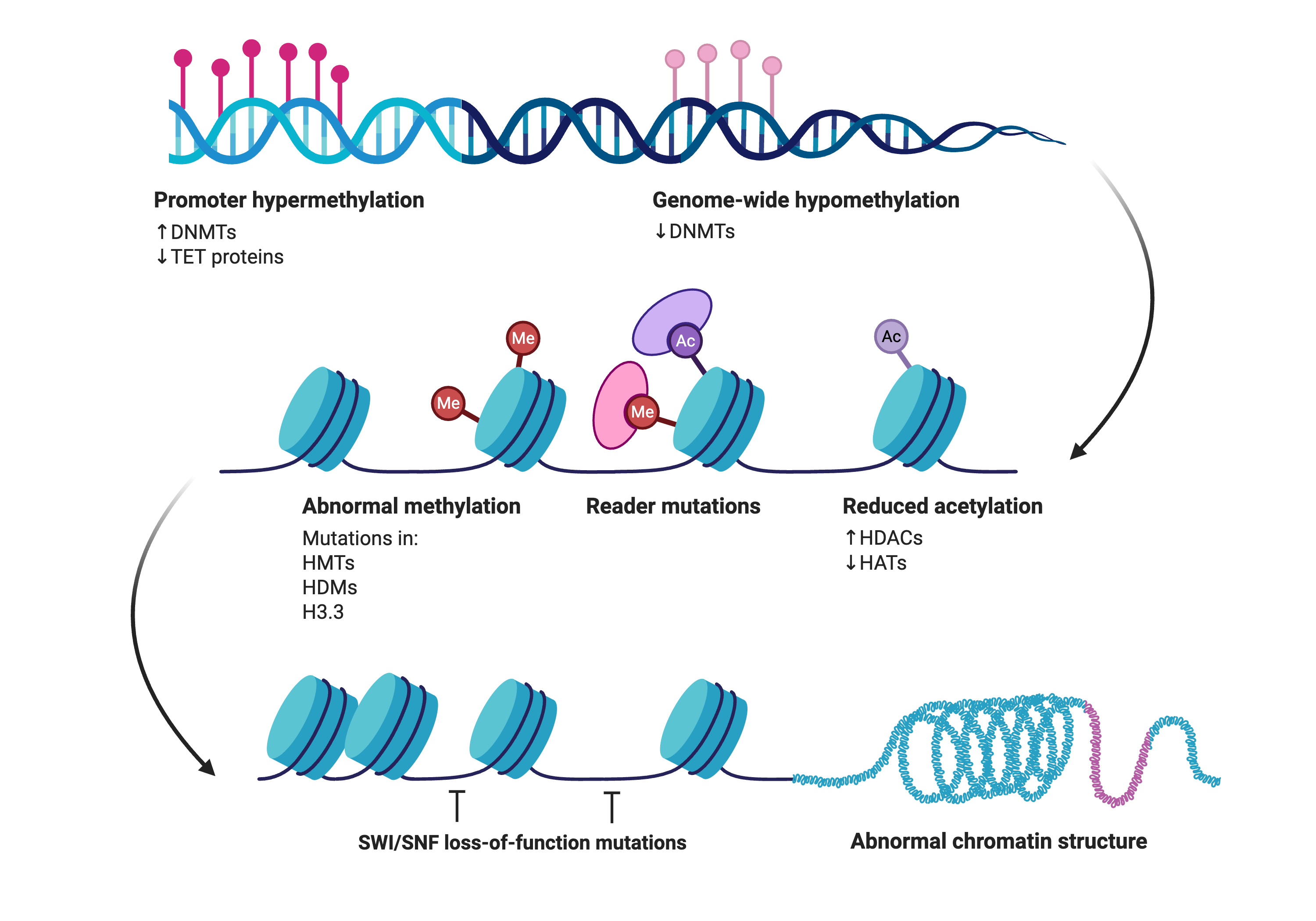
Promoter hypermethylation can silence tumour-suppressive programmes, whereas genome-wide hypomethylation can destabilise the genome. Altered histone modification and SWI/SNF chromatin-remodelling complexes reshape gene accessibility without changing the underlying DNA sequence.4
Created with BioRender.com. Scientific interpretation and caption by QAZIIM.Mechanism, evidence and limitations
Molecular findings are evaluated through biological plausibility, analytical validity, tumour-specific clinical evidence and potential impact on management. Associations from another cancer type are not automatically transferable.3
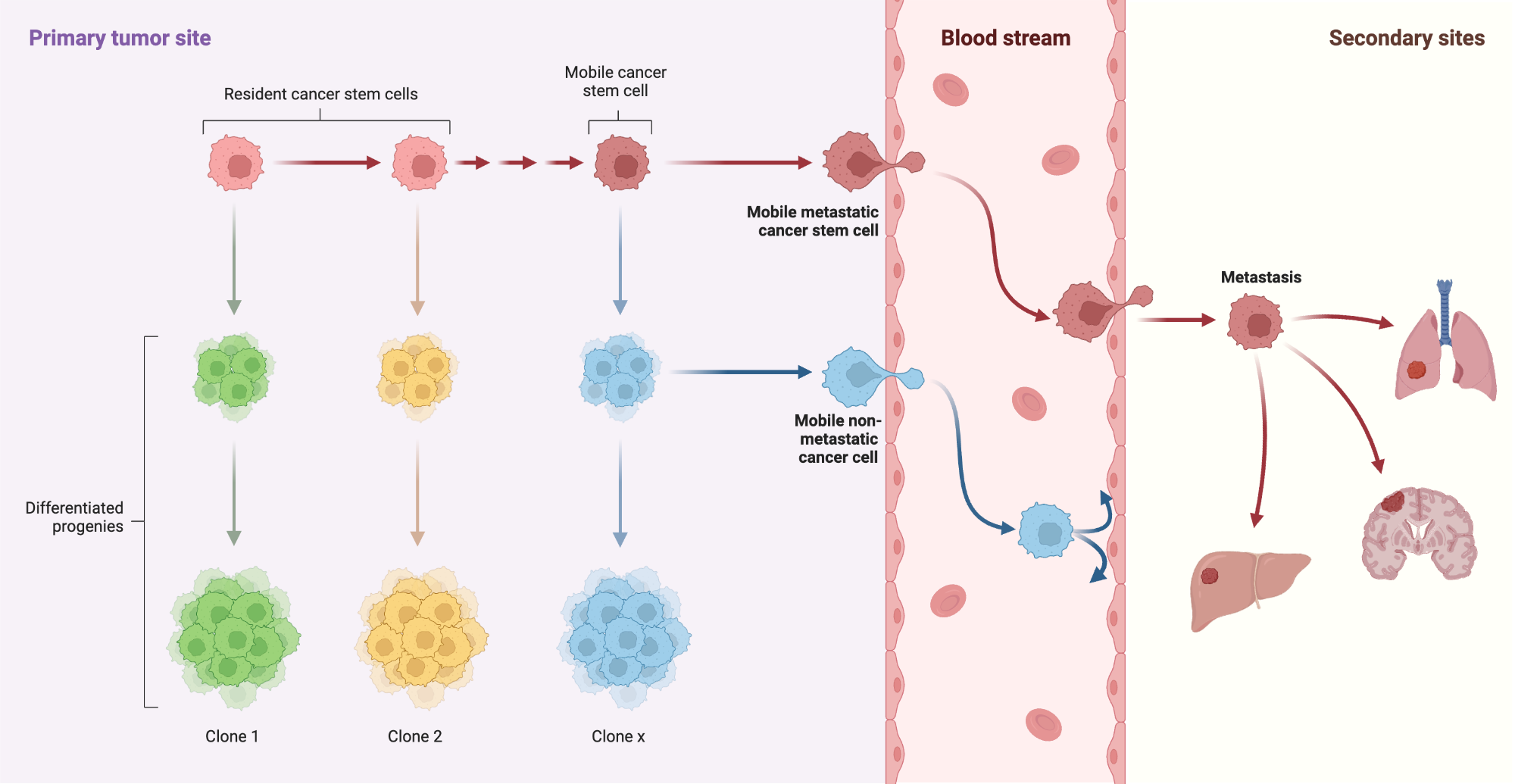
Genetically and phenotypically distinct clones coexist within a primary malignancy. Selected cells can invade, enter the circulation, survive systemic stress, exit at distant tissues and establish metastases; most circulating cells do not complete every step.5
Created with BioRender.com. Scientific interpretation and caption by QAZIIM.Longitudinal and multidisciplinary interpretation
Cancer evolves across anatomical sites and under treatment pressure. Pathology, imaging, treatment history, specimen quality and molecular data are reviewed together, with repeat assessment considered only when it can answer a defined clinical question.4
References
- Chakravarty, D. & Solit, D. B. Clinical cancer genomic profiling. Nat. Rev. Genet. 22, 483–501 (2021).
- Thavaneswaran, S. et al. Therapeutic implications of germline genetic findings in cancer. Nat. Rev. Clin. Oncol. 16, 386–396 (2019).
- Ginsburg, O. et al. The role of genomics in global cancer prevention. Nat. Rev. Clin. Oncol. 18, 116–128 (2021).
- Hanahan, D. Hallmarks of cancer: new dimensions. Cancer Discov. 12, 31–46 (2022).
- Dagogo-Jack, I. & Shaw, A. T. Tumour heterogeneity and resistance to cancer therapies. Nat. Rev. Clin. Oncol. 15, 81–94 (2018).
- Ignatiadis, M., Sledge, G. W. & Jeffrey, S. S. Liquid biopsy enters the clinic. Nat. Rev. Clin. Oncol. 18, 297–312 (2021).