
Comprehensive and disease-focused testing
Available approaches include a 600+ gene pan-cancer panel, a 480+ gene haematology panel, a 100+ gene RNA fusion panel, focused lung-cancer testing, HRD assessment and high-sensitivity hotspot analysis.1
Order through Laboratory →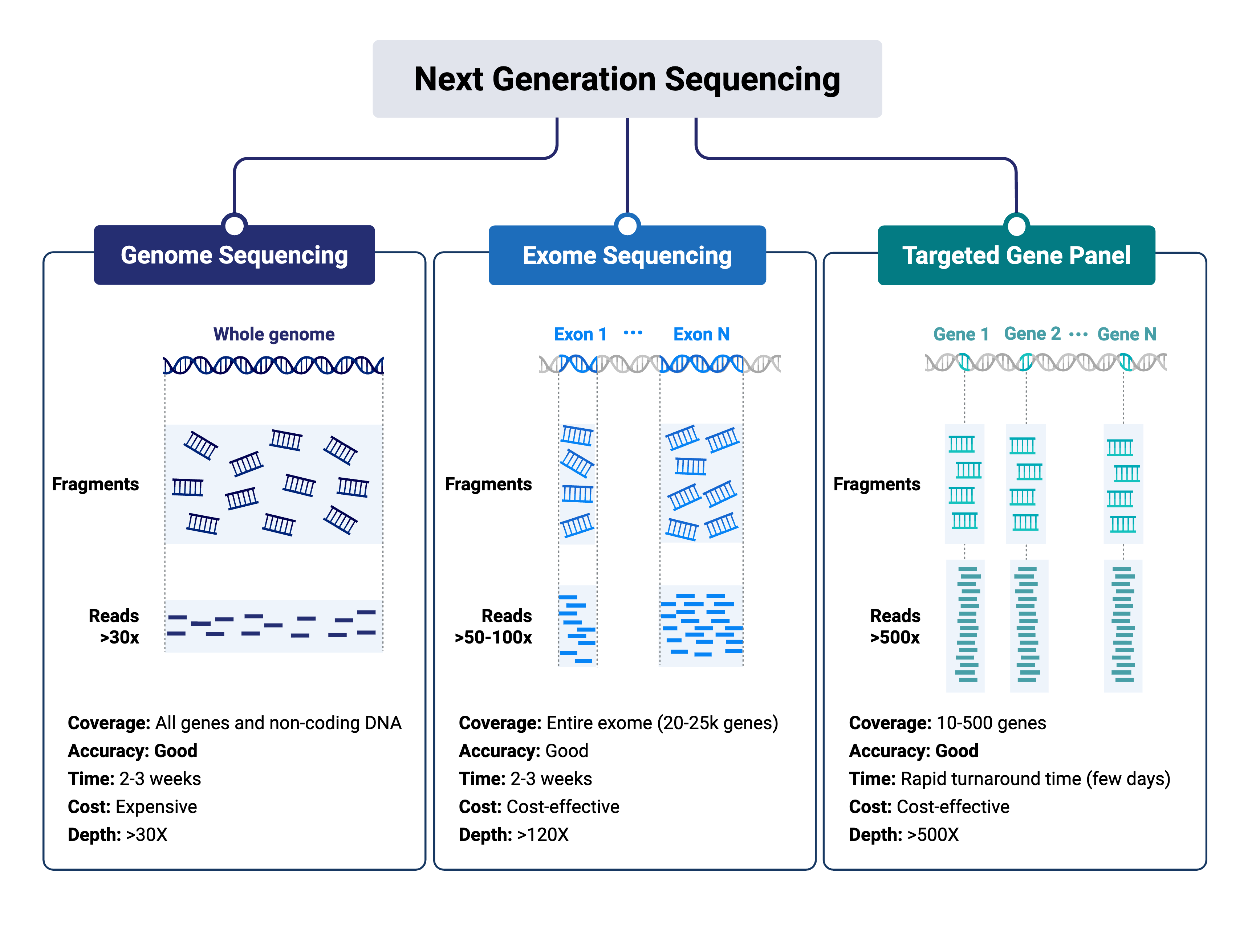
Targeted panels trade genomic breadth for greater depth and faster analysis; exome sequencing focuses on protein-coding regions; genome sequencing captures coding and non-coding variation more broadly. Actual coverage, sensitivity, turnaround and cost depend on assay design, specimen quality and laboratory validation.1
Created with BioRender.com. Scientific interpretation and caption by QAZIIM.Broader sequencing when justified
WES or WGS may be considered for rare or complex cases when targeted testing cannot answer the defined question. Breadth does not replace analytical sensitivity or careful specimen selection.2
Order through Laboratory →Mechanism, evidence and limitations
Molecular findings are evaluated through biological plausibility, analytical validity, tumour-specific clinical evidence and potential impact on management. Associations from another cancer type are not automatically transferable.3
Order through Laboratory →Longitudinal and multidisciplinary interpretation
Cancer evolves across anatomical sites and under treatment pressure. Pathology, imaging, treatment history, specimen quality and molecular data are reviewed together, with repeat assessment considered only when it can answer a defined clinical question.4
Order through Laboratory →References
- Chakravarty, D. & Solit, D. B. Clinical cancer genomic profiling. Nat. Rev. Genet. 22, 483–501 (2021).
- Thavaneswaran, S. et al. Therapeutic implications of germline genetic findings in cancer. Nat. Rev. Clin. Oncol. 16, 386–396 (2019).
- Ginsburg, O. et al. The role of genomics in global cancer prevention. Nat. Rev. Clin. Oncol. 18, 116–128 (2021).
- Hanahan, D. Hallmarks of cancer: new dimensions. Cancer Discov. 12, 31–46 (2022).
- Dagogo-Jack, I. & Shaw, A. T. Tumour heterogeneity and resistance to cancer therapies. Nat. Rev. Clin. Oncol. 15, 81–94 (2018).
- Ignatiadis, M., Sledge, G. W. & Jeffrey, S. S. Liquid biopsy enters the clinic. Nat. Rev. Clin. Oncol. 18, 297–312 (2021).